

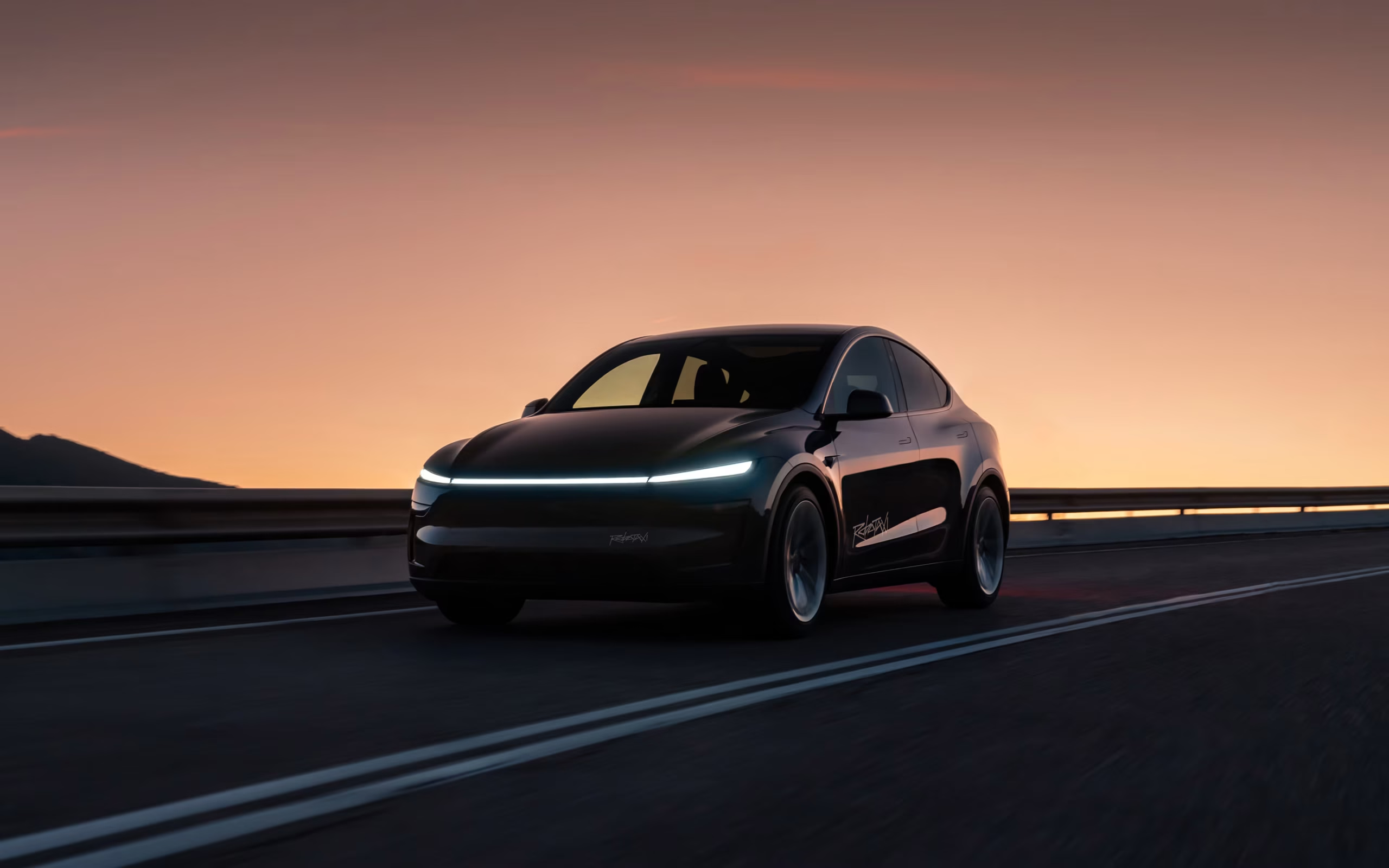
Tesla announced the launch of its robotaxis in 2025. This move represents a significant milestone for both Tesla and the automotive industry as it marks the company’s transition towards autonomous driving capabilities. The robotaxis will be equipped with advanced sensors, artificial intelligence algorithms, and high-performance computing to ensure safe and efficient transportation.
The decision to launch robotaxis in 2025 is driven by several factors. Firstly, advancements in artificial intelligence have enabled vehicles to perform complex tasks such as lane detection, traffic signal recognition, and emergency braking systems. Secondly, the rise of electric vehicles has made them more appealing to consumers looking for eco-friendly options. Lastly, regulatory changes worldwide are encouraging automakers to invest heavily in self-driving technologies to remain competitive.
Industry experts predict that the introduction of robotaxis could revolutionize the way we use automobiles. They suggest that the shift from traditional cars to driverless vehicles will lead to a reduction in accidents due to human error, increased fuel efficiency through optimized routes, and a decrease in carbon emissions. Additionally, the growth of the ride-sharing economy might create new job opportunities while potentially displacing some drivers.
However, there are concerns among policymakers regarding privacy and data security. As these vehicles collect vast amounts of real-time data, ensuring that personal information remains confidential becomes paramount. Furthermore, safety standards must be rigorously maintained to prevent accidents caused by malfunctioning or misbehaving robots.
Background: The Rise of Autonomous Vehicles
The concept of fully automated vehicles has been around for decades, but recent advancements in artificial intelligence (AI), machine learning, and sensor technology have significantly accelerated their practical implementation. Key milestones include:
1. “Google Self-Driving Car Project”: Founded in 2009, Google’s project aimed to develop a fleet of autonomous vehicles for various purposes including delivery services and public transit. In 2014, they began testing their prototypes on California roads under strict government oversight.
2. “Waymo”: After acquiring Google’s self-driving car division, Alphabet Inc., Waymo introduced the first commercially available self-driving taxi service in Phoenix, Arizona, in 2018. Their vehicles operate without a steering wheel, gas pedal, or brake, relying solely on GPS and onboard computers.
3. “Tesla’s Autopilot System”: Introduced in 2016, Tesla’s Autopilot feature uses cameras, radar, ultrasonic sensors, and other hardware to assist with driving tasks like lane following, adaptive cruise control, and parking assistance. It was initially designed for limited scenarios but has since evolved into semi-autonomous capabilities.
Impact: Transformative Changes in Transportation
The launch of Tesla’s robotaxis in 2025 is expected to bring profound impacts across multiple sectors:
Safety Improvements
Autonomous vehicles are predicted to reduce accident rates significantly compared to human-driven cars. With enhanced collision avoidance systems and real-time monitoring, incidents involving pedestrians, cyclists, and other road users are anticipated to decrease dramatically.
Environmental Benefits
Electric-powered autonomous vehicles are considered more environmentally friendly than traditional gasoline-powered ones. By optimizing routes based on energy consumption patterns, these vehicles can contribute to lower greenhouse gas emissions and reduced noise pollution.
Economic Opportunities
The widespread adoption of autonomous vehicles could lead to job displacement for certain professions, particularly those related to vehicle maintenance and manual labor. However, it also opens up new employment opportunities in areas like software engineering, cybersecurity, and logistics management.
Regulatory Challenges
As autonomous vehicles become mainstream, governments will need to address issues related to liability, insurance, and infrastructure requirements. Ensuring robust regulations will be crucial to mitigate risks associated with the integration of advanced technologies into everyday life.
Future Predictions: A Brighter Horizon
While the journey toward achieving true autonomy presents numerous hurdles, experts agree that the long-term outlook is optimistic. According to futurists at Deloitte Consulting, “by 2030, approximately 20% of all passenger miles traveled in urban areas may be handled by fully autonomous vehicles.”
However, they caution that progress will depend greatly on overcoming technical limitations, consumer acceptance, and regulatory frameworks. Continuous investment in R&D and collaboration between tech companies, governments, and NGOs will be essential to realizing this vision.
In summary, the imminent arrival of Tesla’s robotaxis in 2025 signals a transformative era for the automotive industry and society at large. As we navigate this unprecedented landscape, it is clear that innovation powered by artificial intelligence will continue shaping the future of transportation.